In 1975, James Thomas Toomey made his first trip to Ireland at the age of 27. Aside from his father being stationed in the North during World War II, it was the first time a member of this Toomey clan returned to the island since their ancestors set off from Cobh at the height of the famine. Joining James on this adventure were two friends, Irish priests who were serving in the U.S. state of Utah at the time. For James, this was the first of many trips back to Ireland yet it would be 40 years before he visited again. Like father, like son; my identity is tightly wrapped up in the American West, yet I’ve never shaken my longing for Ireland.
My dad has practiced the craft of writing since his adolescence. Over the course of 60 years, he has diligently kept a journal of his travels, current events, and everyday life. In recent years, he has transcribed selections of his writing into new journals as gifts to me. For the first time here, I am choosing to digitize his work and make it available for others to see.
What I have published below is simple for now, but only the beginning of my efforts to preserve my father’s writing in the digital space. Shared here are fragments of much more detailed and nuanced accounts of his trip to “old” Ireland, his return to “new” Ireland, and a few remembrances from over the years.
My decision to publish transcriptions next to images of his original writing allows for accessibility while not taking away from the unique complexity of his handwriting, and the art of putting pen to paper. Time limited my ability to create a dynamic interface for this first publication, but as I digitize more excerpts of these personal narratives my intention is to create an immersive experience for readers.
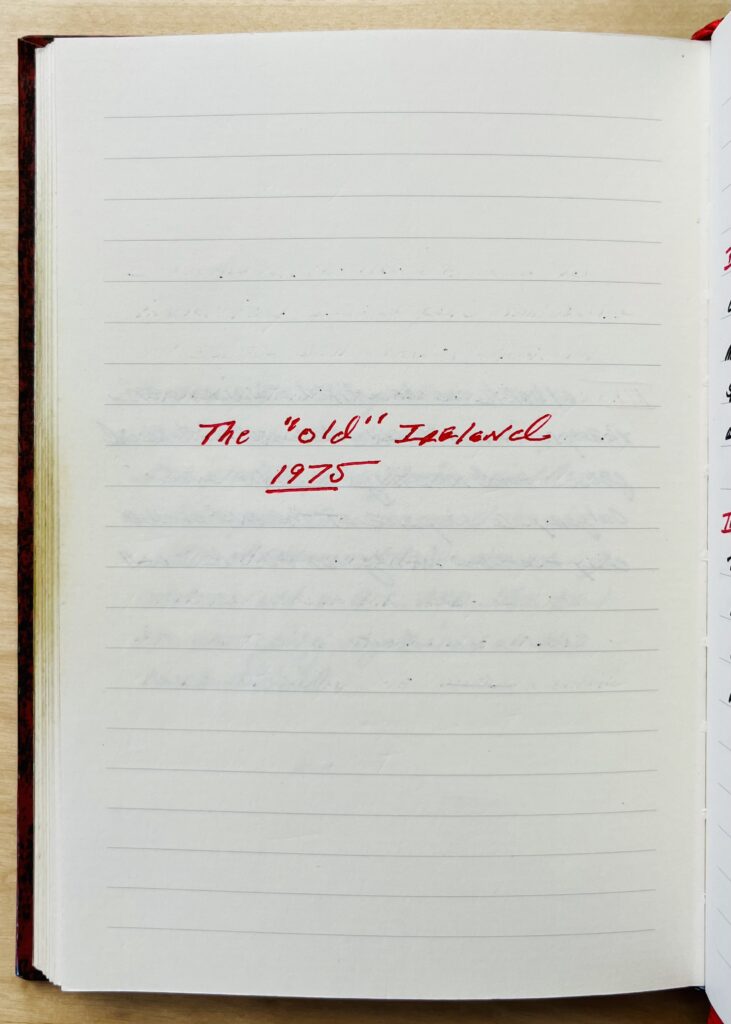
THE “OLD” IRELAND
1975
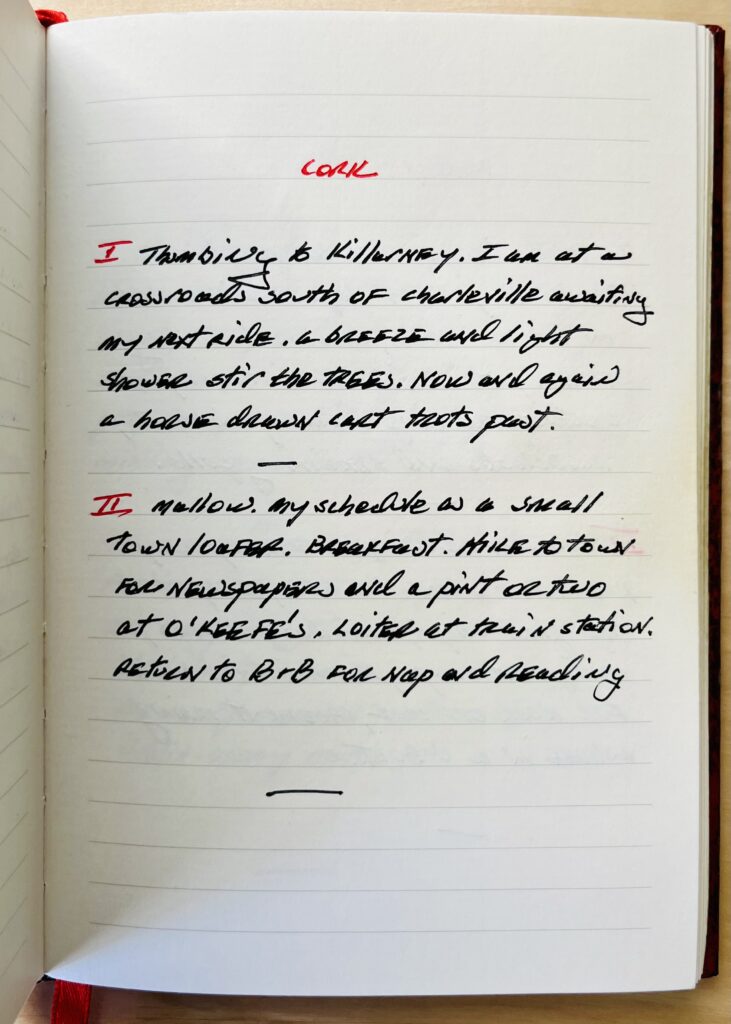
CORK
I. Thumbing to Killarney. I am at a crossroads south of Charleville awaiting my next ride. A breeze and light shower stir the trees. Now and again a horse drawn cart trots past.
II. Mallow. My schedule as a small town loafer. Breakfast. Hike to town for newspapers and a pint or two at O’Keefes. Loiter at train station. Return to B&B for nap and reading.
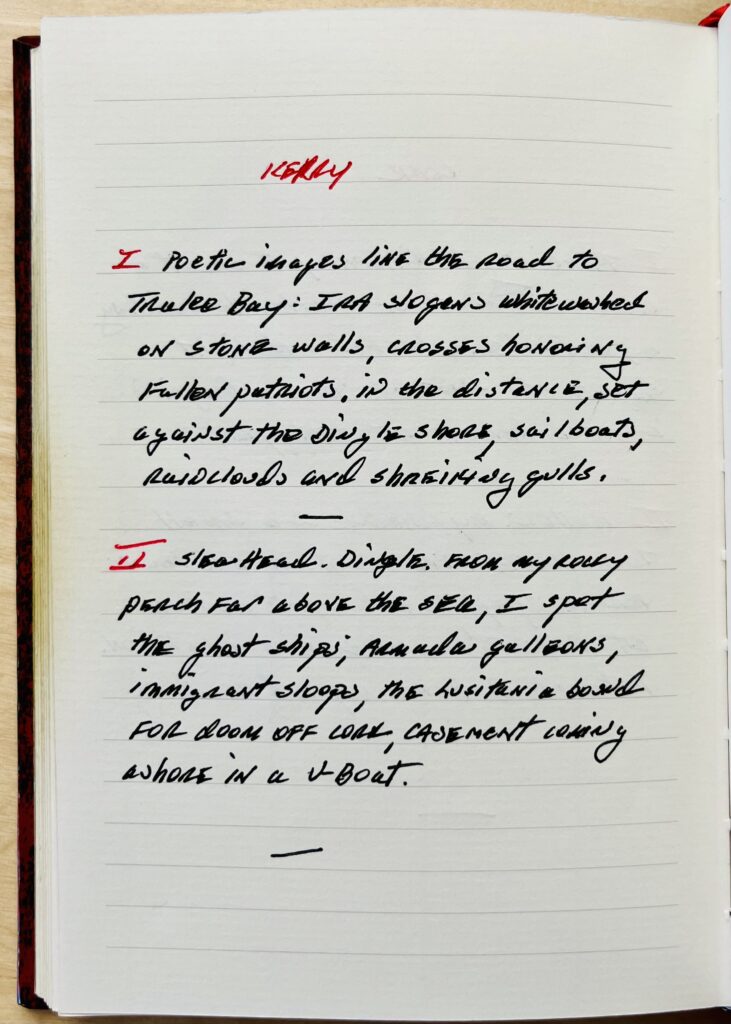
KERRY
I. Poetic images line the road to Tralee Bay: IRA slogans whitewashed on stone walls, crosses honoring fallen patriots. In the distance, set against the Dingle shore, sailboats, rainclouds and shrieking gulls.
II. Slea Head, Dingle. From my rocky perch above the sea, I spot the ghost ships: Armada galleons, immigrant sloops, the Lusitania bound for doom off Cork, Casement coming ashore in a U-boat.
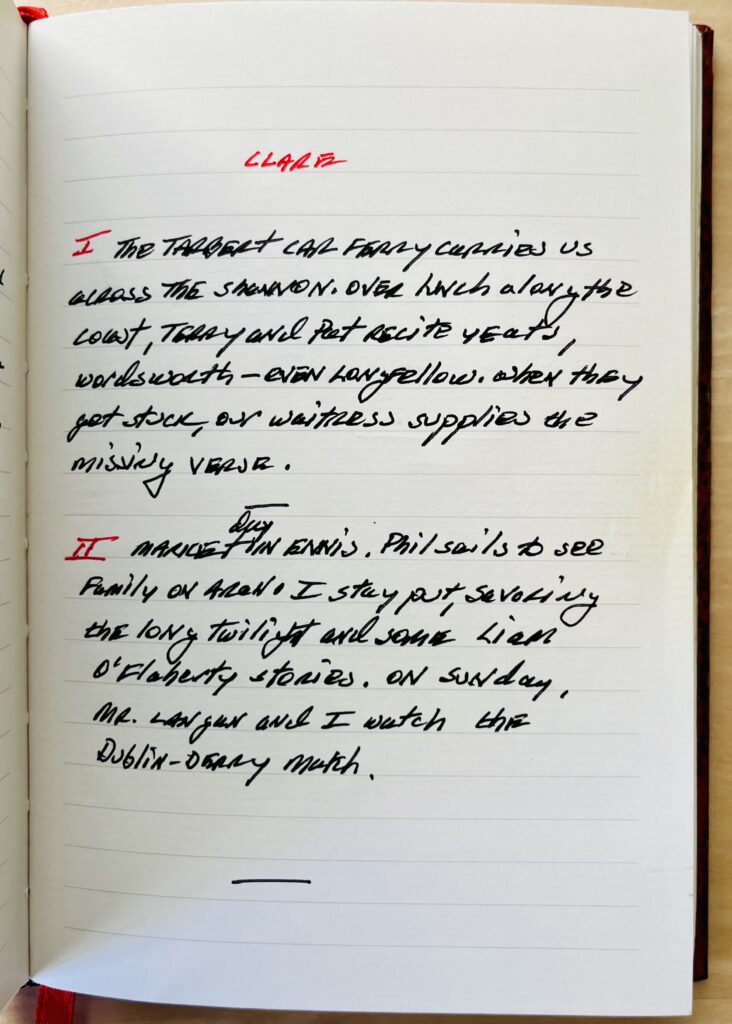
CLARE
I. The Tarbert car ferry carries us across the Shannon. Over lunch along the coast, Terry and Pat recite Yeats, Wordsworth – even Longfellow. When they get stuck, our waitress supplies the missing verse.
II. Market day in Ennis. Phil sails to see family on the Aran Islands. I stay put, savoring the long twilight and some Liam O’Flaherty stories. On Sunday, Mr. Langan and I watch the Dublin-Derry match. [Jimmy Keavaney, Tony Hanahoe, Anton O’Toole led the Dubs into the finals against Kerry.]
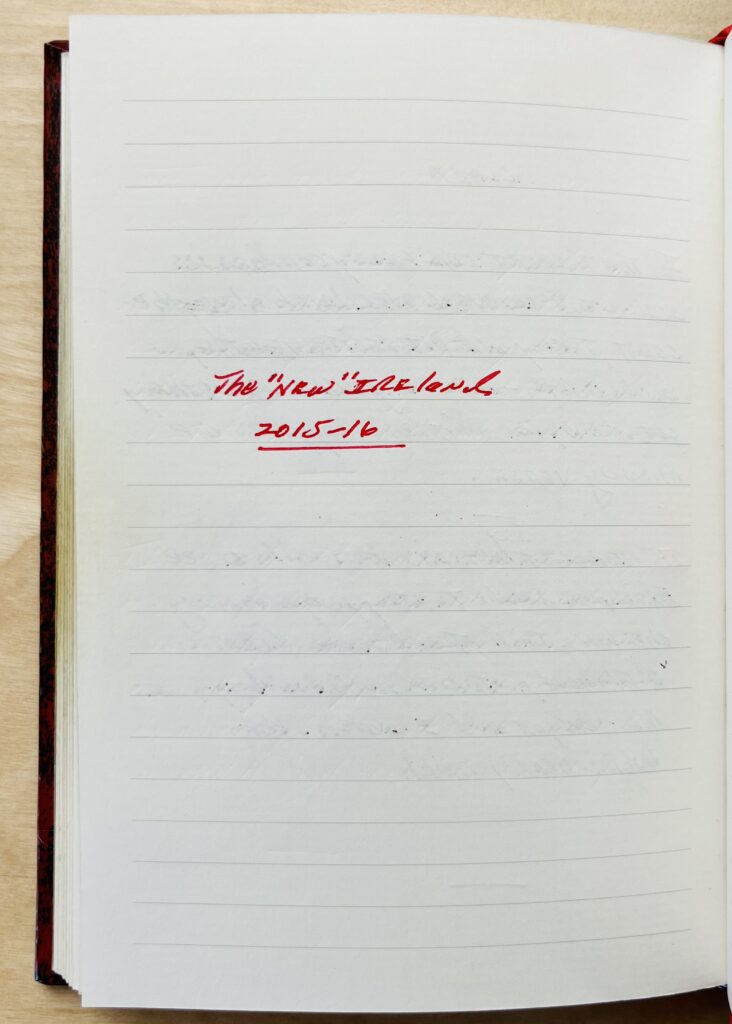
THE “NEW” IRELAND
2015-2016
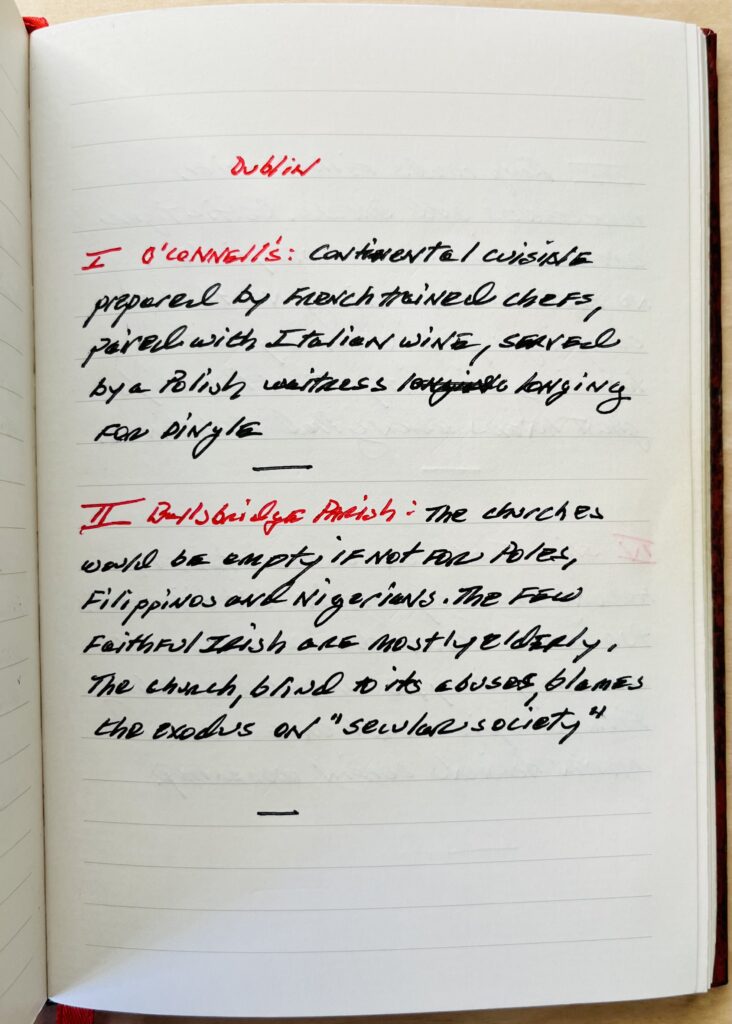
DUBLIN
I. O’Connell’s: continental cuisine prepared by French trained chefs, paired with Italian wine, served by a Polish waitress longing for Dingle.
II. Ballsbridge Parish: the churches would be empty if not for Poles, Filipinos and Nigerians. The few faithful Irish are mostly elderly. The church, blind to its abuses, blames the exodus on “secular society.”
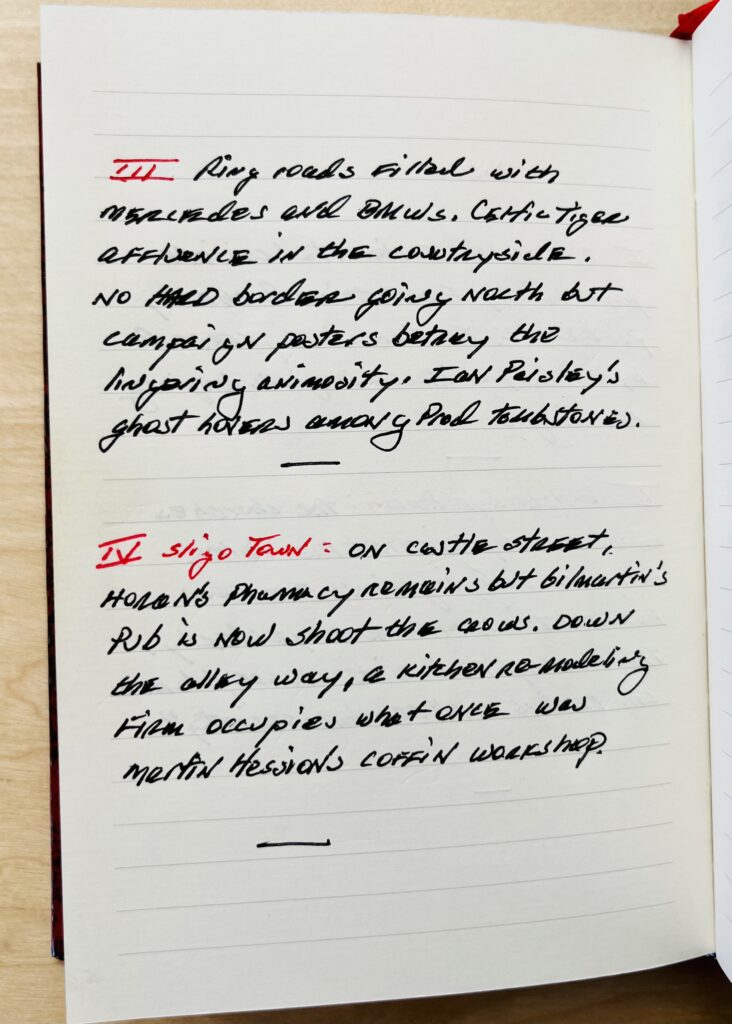
III. Ring roads filled with Mercedes and BMWs. Celtic Tiger affluence in the countryside. No hard border going north, but campaign posters betray the lingering animosity. Ian Paisley’s ghost hovers among Protestant tombstones.
IV. Sligo Town: on Castle Street, Horan’s Pharmacy remains, but Gilmartin’s Pub is now Shoot the Crows. Down the alleyway, a kitchen remodeling firm occupies what was once Martin Hession’s coffin workshop.
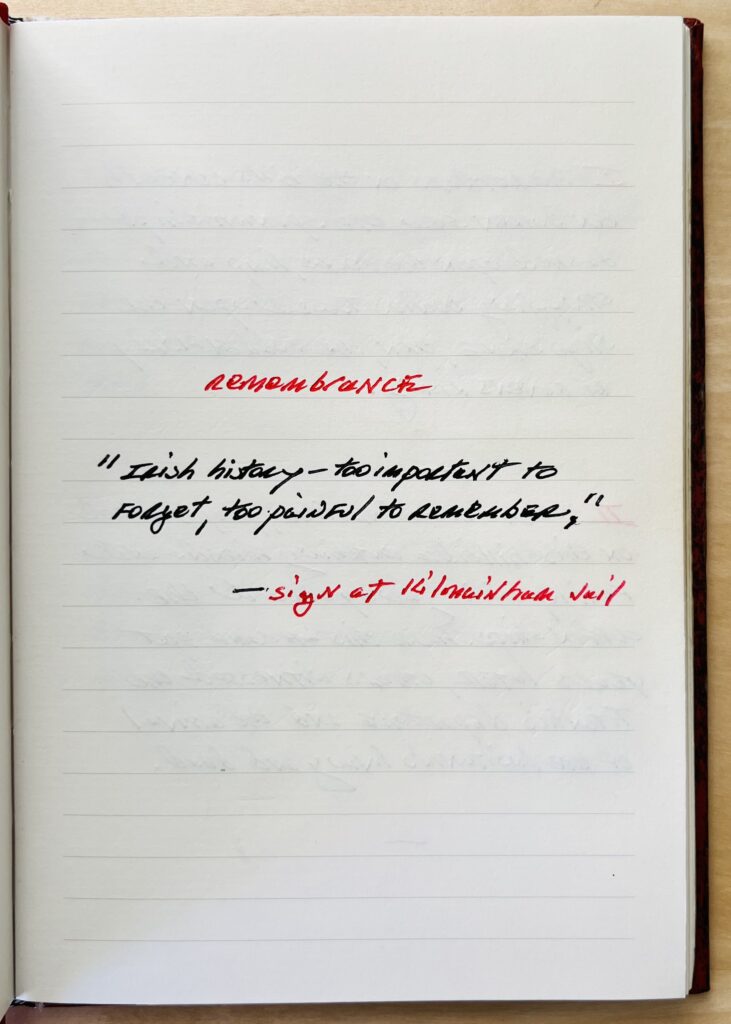
REMEMBRANCE
“Irish history – too important to forget, too painful to remember.”
– sign at Kilmainham Gaol
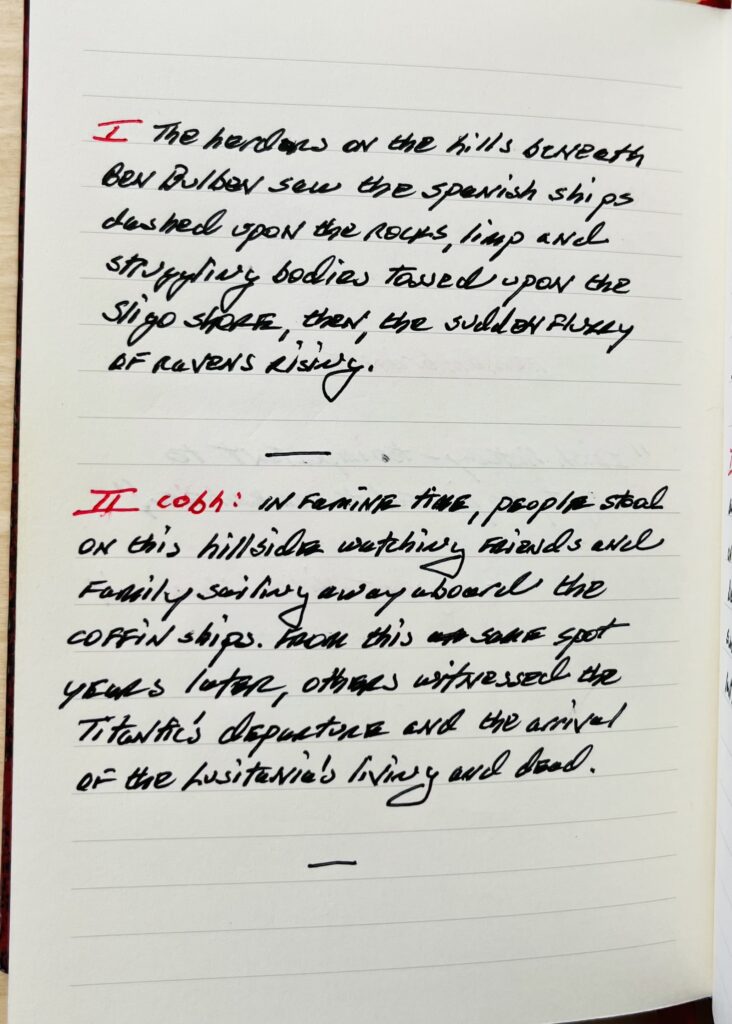
I. The herders on the hills beneath Ben Bulben saw the Spanish ships dashed upon the rocks, limp and struggling bodies tossed along the Sligo shore, then, the sudden flurry of ravens rising.
II. Cobh: in famine times, people stood on this hillside watching friends and family sailing away aboard the coffin ships. From this same spot years later, others witnessed the Titanic’s departure and the arrival of the Lusitania’s living and dead.
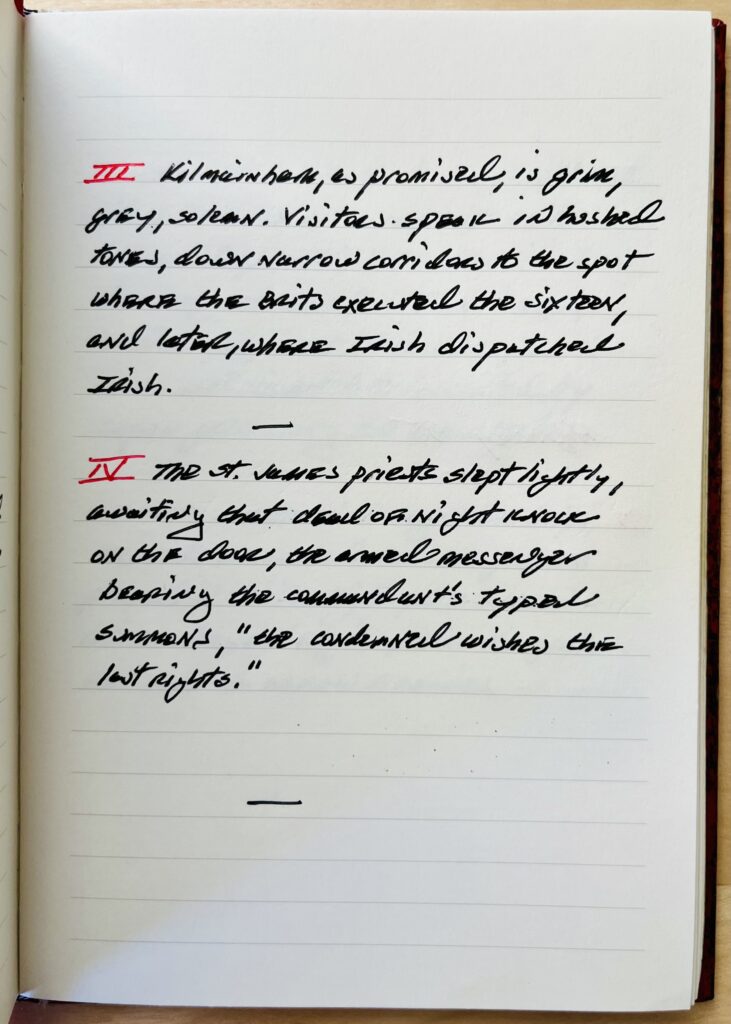
III. Kilmainham, as promised, is grim, grey, solemn. Visitors speak in hushed tones, down narrow corridors to the spot where the Brits executed the sixteen, and later, where Irish dispatched Irish.
IV. The St. James priests slept lightly, awaiting that dead of night knock on the door, the armed messenger bearing the commandant’s typed summons, “the condemned wishes the last rights.”
